A roofing system is far more complex than the shingles you see from the street. It is a carefully engineered structure made up of multiple layers, each designed to perform a specific function. When these layers work together properly, they protect your home from water intrusion, wind uplift, heat buildup, and structural deterioration. When even one layer fails, the entire system becomes vulnerable.
Understanding the anatomy of a roofing system helps homeowners make informed decisions about maintenance, repairs, and replacements. It also clarifies why professional installation and regular inspections are essential for long-term durability.
The experienced roofing professionals at 3jmext.com emphasize that a roof isn’t just a surface; it’s a system. Below is a complete breakdown of the key roofing layers and components, along with why each matters.
| Anatomy Of A Roofing System | Warning Sign | What It May Indicate |
| Roof Decking (Foundation) | Sagging rooflines | Compromised decking or structural weakness |
| Underlayment (Moisture Barrier) | Water stains on ceilings | Underlayment breach or water intrusion |
| Ice & Water Shield | Leaks near valleys or eaves | Failed waterproof membrane |
| Shingles / Primary Roofing | Missing or curling shingles | Weather damage or aging materials |
| Shingle Surface Layer | Granule buildup in gutters | Shingle deterioration |
| Flashing & Edge Protection | Leaks near chimneys or vents | Improper or damaged flashing |
Introduction: Why Anatomy Of A Roofing System Matters to Homeowners
Many homeowners think of a roof as a single product. In reality, it is a multi-layered system designed for protection, insulation, ventilation, and structural support. Each component performs a specialized role, and removing or compromising one can affect the performance of the others.
Homeowners who understand roof anatomy are better equipped to:
- Recognize early signs of deterioration
- Communicate effectively with roofing contractors like 3jmext
- Make informed material and repair decisions
- Protect long-term property value
When homeowners understand how their roofing system functions, they are better prepared to prevent costly damage and ensure lasting performance.
1. The Foundation – Roof Decking and Sheathing
At the core of every roofing system lies the roof deck, also known as sheathing. This foundational layer is typically constructed from plywood or oriented strand board (OSB). It serves as the structural base that supports all other roofing components.
Why the Roof Deck Matters
The decking provides stability and distributes weight evenly across the roof structure. It must be strong enough to withstand:
- Snow loads
- Wind uplift pressure
- Foot traffic during installation
- The weight of roofing materials
If moisture penetrates and reaches the decking, wood rot, soft spots, or sagging can occur. Compromised decking weakens the entire roofing system and typically requires professional repair or replacement. Roofing experts at 3jmext always inspect the decking before any repair or replacement to ensure a solid foundation.
2. Protective Barriers – Underlayment and Ice & Water Shield
Directly above the roof deck sits the underlayment, a critical moisture barrier. While shingles act as the primary defense against weather, the underlayment provides secondary protection if water gets beneath the surface.
Types of Underlayment
There are generally two main types:
- Felt underlayment (traditional, asphalt-saturated felt)
- Synthetic underlayment (lightweight, durable, and moisture-resistant)
Synthetic options typically offer improved tear resistance and a longer lifespan, which many professional installers, such as 3jmext.com, recommend in harsh climates.
Ice & Water Shield
In colder climates or areas prone to heavy rain, an ice and water shield is installed in vulnerable zones such as:
- Roof valleys
- Eaves
- Around chimneys and vents
- Skylight perimeters
This self-adhering membrane prevents water infiltration from ice dams or wind-driven rain, an upgrade that 3JM often applies to enhance long-term performance. Without proper underlayment and shielding, even minor shingle damage can allow water to penetrate the roof structure.
3. Weather Shield – Primary Roofing Materials
The outermost layer of the roof is the visible roofing material, the part most homeowners focus on. This layer acts as the first line of defense against environmental elements.
Common Roofing Materials
- Asphalt shingles (three-tab, architectural, luxury)
- Metal roofing panels
- Clay or concrete tiles
- Slate
- Synthetic roofing systems
Each material offers different characteristics in terms of:
- Durability
- Wind resistance
- Impact resistance
- Longevity
- Aesthetic appeal
Why the Top Layer Alone Isn’t Enough
Although shingles or tiles are crucial, they cannot function effectively without proper support and layering beneath them. Even high-end materials will fail prematurely if installed over damaged decking or without adequate underlayment.
The top roofing layer works in partnership with all underlying components, a principle emphasized by professionals at 3jmext.
4. The Sealing System – Flashing and Edge Protection
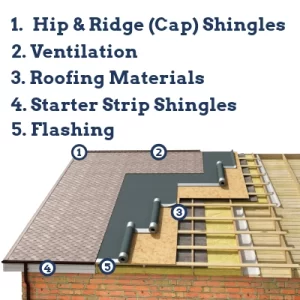
Water typically enters roofs at transitions and penetrations, not through the middle of shingles. That is why flashing and edge components are essential.
Flashing
Flashing is typically made of metal and installed around:
- Chimneys
- Skylights
- Vent pipes
- Roof-to-wall intersections
It seals gaps where roofing materials meet vertical structures and prevents water intrusion at vulnerable points.
Drip Edge and Edge Protection
A drip edge is a metal strip installed along the roof edges. It helps guide water into gutters and prevents water from backing up beneath shingles. Improper flashing installation is one of the most common causes of roof leaks. Roofing technicians at 3jmext.com pay detailed attention to flashing and edge work to ensure proper water resistance.
5. The Airflow System – Ventilation Components
A roofing system does more than keep water out; it also regulates airflow. Proper ventilation prevents heat and moisture buildup in the attic, protecting both the roofing system and the home’s interior.
Types of Roof Ventilation
- Ridge vents
- Soffit vents
- Gable vents
- Powered attic fans
Why Ventilation Matters
Poor ventilation can lead to:
- Mold and mildew growth
- Ice dam formation
- Shingle blistering
- Increased energy bills
- Premature material aging
Balanced airflow between intake (soffit vents) and exhaust (ridge vents) ensures a stable attic environment. Proper ventilation is a key focus during inspections and installations by 3jmext experts.
6. Performance Enhancements – Insulation and Ridge Systems
While insulation is technically part of the attic system, it directly impacts roofing performance.
Insulation
Proper attic insulation:
- Regulates indoor temperatures
- Reduces energy costs
- Prevents condensation
- Supports ventilation efficiency
Insufficient insulation allows warm air to escape into the attic, increasing the risk of ice dams and moisture-related problems.
Ridge Systems
Advanced ridge systems improve airflow and provide weather-resistant capping along roof peaks. Ridge caps also protect shingle seams and enhance durability.
When insulation and ventilation work together, they extend the life of the roofing materials above, a strategy that professionals at 3jmext.com implement to maximize system longevity.
Warning Signs Your Roof Needs Attention
Even well-designed roofing systems experience wear and tear over time. Homeowners should watch for warning signs of layer failure or progressive damage, such as missing or curling shingles, granule buildup in gutters, water stains on ceilings, sagging roof lines, moss or algae growth, and excessive attic moisture.
These issues often originate in the underlying roofing layers rather than just the surface materials. Early detection and professional evaluation can help prevent structural deterioration and reduce the risk of costly repairs.
Maintenance Schedule for Roof Longevity
Proactive maintenance significantly extends your roofing system’s lifespan. A seasonal approach is recommended:
Spring
- Inspect after winter weather
- Clean debris from gutters
- Check flashing and sealants
Summer
- Assess heat-related wear
- Verify attic ventilation
- Look for UV damage
Fall
- Remove leaves and debris
- Inspect roof valleys and edges
- Prepare for winter conditions
Winter
- Monitor snow loads
- Watch for ice dam formation
- Ensure attic insulation performs properly
In addition to seasonal checks, professional inspections every few years, like those offered by 3jmext.com, help catch hidden issues before they escalate.
Why Every Layer Truly Counts
A roofing system is only as strong as its weakest component. Decking provides the structural foundation. Underlayment offers secondary moisture protection. Shingles shield against the elements. Flashing seals vulnerable transitions. Ventilation regulates airflow. Insulation supports performance.
If even one layer fails, others must compensate, often leading to accelerated deterioration and reduced lifespan.
Homeowners who understand roofing anatomy are better prepared to:
- Invest in quality materials
- Choose experienced professionals like 3jmext
- Prioritize preventive maintenance
- Protect long-term home value
A roof is not just shingles; it is a carefully coordinated system engineered to safeguard your home.
If you notice any of these warning signs, prompt action is essential to prevent further damage. The experienced team at 3jmext.com provides comprehensive roof inspections, accurate diagnostics, and dependable repair solutions to protect your home’s structural integrity. Addressing issues early can help avoid costly repairs and extend the lifespan of your roofing system. Call (630) 985-6494 or fill out our contact form to schedule a professional evaluation and ensure your roof remains strong and secure year-round.
Final Thoughts
Understanding the anatomy of A roofing system makes it clear that every layer plays an essential role. From foundational decking to protective flashing and ventilation systems, each component contributes to overall durability and efficiency.
Neglecting even one layer can compromise structural integrity, increase repair costs, and shorten the roof’s lifespan. By understanding how these layers work together and partnering with trusted professionals such as 3jmext.com, homeowners can ensure their roofs remain structurally sound, weather-resistant, and built to last.
Your roof deserves more than just surface attention; it requires a layered approach that accounts for strength, protection, comfort, and longevity. With the right care and expertise, your roofing system can protect your home for decades to come.
FAQs
What is the number of layers on a roof?
Roofing Underlayment: An additional layer of protection placed between shingles and decking. The initial layer of shingles at the roofline that supports the rows above is known as the “starter shingles.” Roof Covering: The visible top layer, such as tile, metal roof panels, or asphalt shingles.
A three-layer flat roof system: what is it?
A conventional built-up roofing system, the 3 Layer Felt Roofing System consists of three layers of hot bitumen-built felt membranes. The base layer, reinforcing layer, and cap sheet make up the layers.
How many 3-tab shingle layers are there?
A single flat layer is split into three equal tabs to create 3-tab shingles, a classic kind of asphalt roofing that looks neat and consistent.
Which three components make up a roof?
Ridge: The roof’s highest point where two sloping sides converge. The slanted beams that go from the ridge to the eaves and support the roof are called rafters. Eaves: The lower roof edges that protrude from a building’s walls.
What are the five types of roofs?
The five common types of roofs are gable, hip, flat, mansard, and gambrel. A gable roof has two sloping sides that form a triangular shape, while a hip roof slopes downward on all four sides for added stability. A flat roof has a low or nearly level slope and is often used in commercial buildings. A mansard roof features four sides with a steep lower slope and a flatter upper section, and a gambrel roof has two slopes on each side, commonly seen on barns and colonial-style homes.